Contact us for a personalized quote [email protected]
EU companies: VAT-free purchase available [email protected]
Need advice before your purchase? [email protected]

Gusto
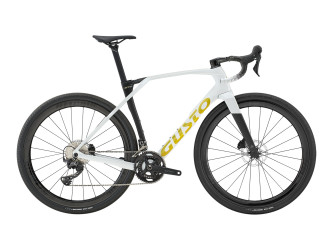
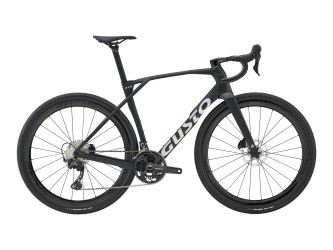
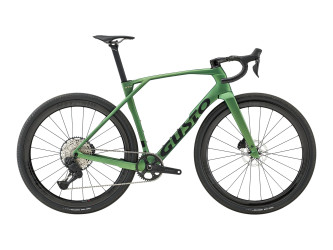
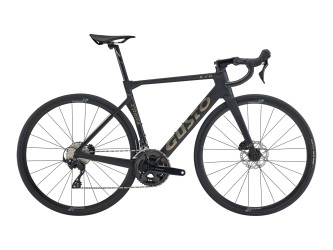
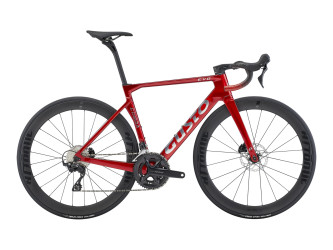
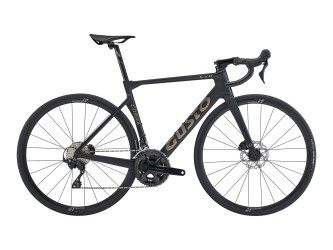
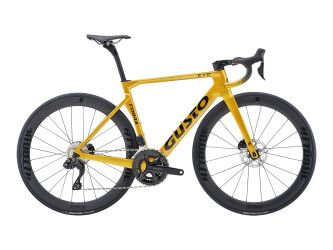
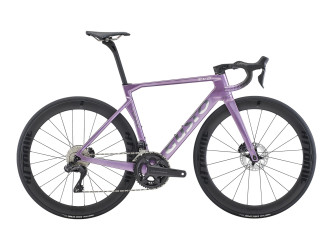
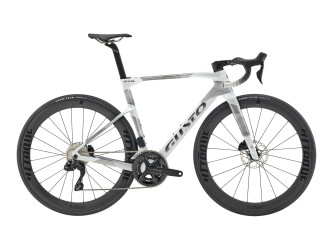
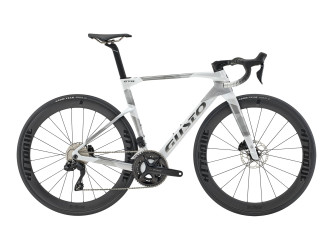


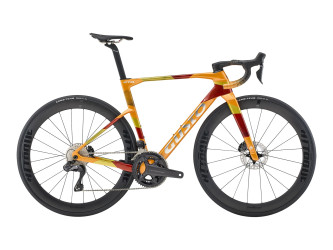
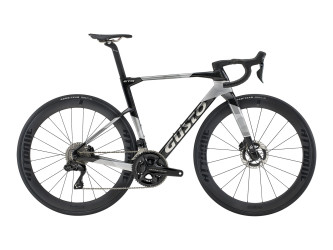
Gusto shop online
Origins and DNA of the Gusto brand
Founded in Taiwan in 2011, Gusto (short for Game Urban Style Technology Original) designs its own carbon frames and Attaque components, and supplies Europe from its centre in Naklo, Slovenia. Tadej Pogačar won the 2018 Tour de l'Avenir on a Gusto with the Ljubljana Gusto Xaurum team, the race that revealed him before his Tour de France wins. Today the brand backs the Pogi Team Gusto Ljubljana, the Slovenian champion's youth team.
Pogačar, Tour de l'Avenir 2018: the win that put Gusto on the map
In 2018 a 19-year-old Slovenian won the Tour de l'Avenir, the 'Tour de France for young riders', with the Ljubljana Gusto Xaurum team and on a Gusto bike: Tadej Pogačar. Two years later he won the Tour de France. The link between Gusto and Slovenia has never broken: the brand's European centre is in Naklo, and Gusto now backs the Pogi Team Gusto Ljubljana, the youth team built around the champion.
I.L.C.: latex inside the carbon
|
In plain terms: what it changes for you Put a glass straight onto a wooden table and the knock rings through it. Put it on a rubber coaster and the table is just as solid, but the knock is softened. The I.L.C. frame works the same way: a thin layer of latex (rubber) and a supple fibre, Innegra, are laid into the carbon. They act as the coaster and filter small road vibrations before they reach your hands, back and saddle. The carbon keeps its stiffness, so when you push on the pedals the bike goes.
|
The technical detail
Three layers working together. The I.L.C. (Innegra Latex Composite) stacks a latex layer, an Innegra fibre layer and Toray T1000 carbon. When the road sends a shock, it first passes through the latex, an elastomer that deforms and dissipates part of the energy, then through the Innegra, which absorbs more before the rest reaches the carbon structure. The T1000 carbon, a very high-strength Japanese fibre, keeps all the stiffness you need for pedalling.
Why Innegra? It is a high-performance polypropylene fibre made in the USA, lighter than carbon, glass or aramid, very impact-resistant and water-repellent. It is used in tennis racquets and hockey sticks precisely to filter vibration. Combined with carbon, it is not there to add stiffness: it makes the laminate tougher and less harsh.
A patented process. Gusto's damping frame structure is protected in Taiwan by utility model patent no. M621195, "Bicycle frame and bicycle", filed by Leadforce International Bicycle Co., the Taiwanese company behind Gusto, and valid until 2031. It belongs to the same family of ideas as the viscoelastic layers other brands put in their top-end frames, but here it runs through the whole range, from the entry price.
Made and tested in-house. Gusto controls production: cutting the carbon sheets, pre-moulding, vacuum and inflatable-bladder moulding, assembly checks, sanding, ANP (Aurora Nano Paint) painting and final inspection. Its laboratory tests frames to European EN standards: fatigue of the seatpost, head tube and bottom bracket, frame impact, and stiffness of the bottom bracket, head tube and dropouts. The frame is UCI approved with a lifetime warranty.
What it means on the bike. On a 3 or 4 hour ride the difference does not show on your computer but in your hands, back and legs at the end: less vibration transmitted, so less fatigue, without losing liveliness when you accelerate. That is the argument that sets it apart from conventional carbon frames at the same price.
Which Gusto should you choose: GTR, Cobra Evo or GTG?
All three bikes share the same T1000 + I.L.C. carbon, the lifetime frame warranty and an all-Shimano build. What separates them is how you ride: geometry, tyre clearance and position change everything.
| GTR | Cobra Evo DB | GTG | |
| Riding | Fast road, long rides, sportives | Racing, mountains, fast group rides | Fast gravel, dirt roads, rough tarmac, light bikepacking |
| For whom | Riders who want aero speed without an extreme position | Racers and climbers who want a lively, responsive bike | Riders leaving the tarmac who still want to go fast |
| Position | Streamlined but more upright (tall stack, short reach) | Low and long, a race position | Upright and stable, slacker steering |
| Stack / reach (size M) | 550 / 380 mm | 540 / 377 mm | 575 / 390 mm |
| Head angle (M) | 72° | 73° | 71° |
| Tyre clearance | 28 to 32 mm | Road tyres (25 mm as standard) | 45 to 50 mm |
| Stock wheels | Attaque 50 mm carbon | Attaque 50 mm carbon or 30 mm alloy | Attaque 40 mm carbon |
| Drivetrains | Dura-Ace, Ultegra, 105 Di2, 105 | Ultegra Di2, 105 Di2, 105 | GRX Di2 1x12, GRX 2x12 |
| Approx. weight | ≈ 7.1 kg (MAX) | ≈ 8.0 kg (PRO TE) | not published |
| Retail price | €2,740 to €6,250 | €2,190 to €4,390 | €2,590 to €4,390 |
Approximate weights published by European retailers; they vary with size and build.
Gusto ranges at LVR Cycles
- Gusto GTR: the endurance-aero road bike: streamlined yet comfortable position, tyres up to 32 mm. MAX (Dura-Ace Di2), PRO TE (Ultegra Di2), SPORT TE (105 Di2) and ELITE ULTRA (105) builds.
- Gusto Cobra Evo DB: the race bike, developed with pro teams: low position, quick steering. PRO TE, SPORT TE, SPORT, ELITE ULTRA and ELITE builds.
- Gusto GTG: the fast gravel bike: tyres up to 45-50 mm, Shimano GRX 1x12 Di2 or 2x12. PRO TE, SPORT TE and ELITE ULTRA builds.
Why buy a Gusto from LVR Cycles?
At LVR Cycles, our own workshop builds your Gusto: you choose the build, size and colour, we receive the frame kit and components, then we assemble, prepare and check the bike before boxing it and shipping it to you. Allow 2 to 3 weeks until delivery to your door. We advise you on the right size before the build, every bike runs Shimano only and every frame has a lifetime warranty.